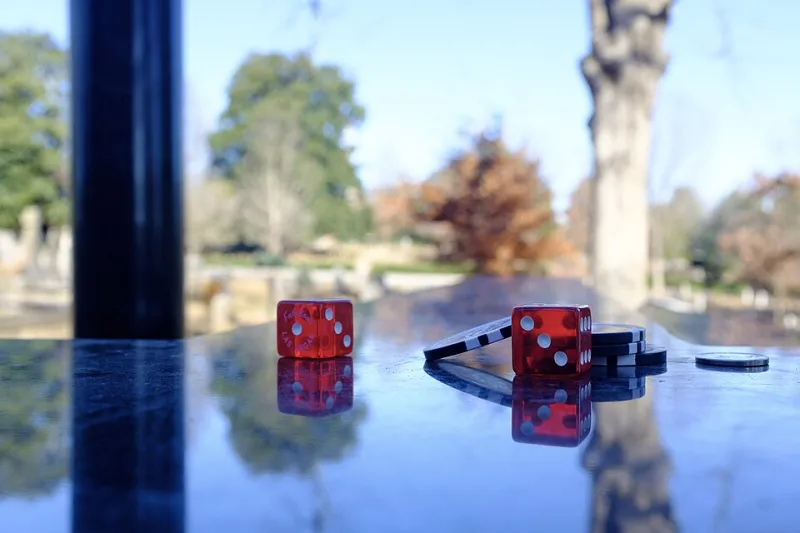
Don't Let the Tilt Win: A Field-Tested Mental Playbook for Staying Ice Cold When Runs Go Wrong
It happens to everyone. You're running well, feeling dialed in, and then the wheels fall off. A bad beat leads to a loose call, the loose call leads to a bad bluff, and suddenly you're down three buy-ins wondering what just happened. Welcome to tilt — the single most preventable cause of unnecessary losses in the Arena.
Here's the thing about tilt: it doesn't announce itself. It creeps in quietly through frustration, impatience, or wounded pride, and then it quietly takes your decision-making out back and leaves it in a ditch. The good news? You can learn to spot it early, interrupt it fast, and build habits that make you genuinely harder to knock off your game.
First, Know What You're Actually Fighting
Tilt isn't just anger. That's the version most people recognize — the slammed desk, the reckless all-in after a brutal beat. But tilt has quieter forms that are arguably more dangerous because they're easier to miss.
There's frustration tilt, which shows up as impatience and a tendency to force action where none exists. There's confidence tilt, where a big win inflates your sense of invincibility and leads to sloppy spots. There's boredom tilt, the enemy of long sessions, where you start manufacturing action just to feel something. And there's loss-chasing tilt, possibly the most destructive of all — the mental state where the only goal becomes getting back to even, regardless of the quality of decisions required to get there.
Sports psychologists who work with competitive athletes describe tilt as a disruption to the brain's prefrontal cortex — the part responsible for rational decision-making. When emotional arousal spikes, the limbic system (your primal, reactive brain) starts running the show. In gaming terms: the emotional part of you wants to punish the bad beat, and the rational part of you is temporarily offline.
Knowing this isn't just interesting trivia. It's the foundation of every tilt-prevention technique that actually works.
Trigger Mapping: Know Your Personal Warning Signs
Before you can stop tilt, you need to know what flips your switch. This is where honest self-assessment comes in, and most players skip it because it's uncomfortable.
Take ten minutes after your next rough session and ask yourself: what specifically happened right before the wheels came off? Was it a specific type of loss — a cooler, a bad call you knew was wrong, a suck-out on the river? Was it the third loss in a row, or was it one single devastating hand? Did something outside the game bleed in — a stressful day, a distraction, low energy?
Pro players in poker, esports, and competitive sports betting often keep session journals precisely for this exercise. They're not writing a diary — they're building a personal tilt profile. Once you know your triggers, you can build specific countermeasures instead of relying on generic willpower.
The Three-Breath Reset (It's Not as Soft as It Sounds)
Breathing techniques have been standard in elite sports performance coaching for decades, and they work for the same neurological reason tilt happens in the first place. Slow, controlled breathing activates the parasympathetic nervous system — the body's natural counterweight to stress arousal. In plain terms: it tells your brain to stop treating a bad beat like a physical threat.
The technique used by many competitive players is simple. After a significant loss or a frustrating sequence, step away from the action if possible. Take three slow breaths — inhale for four counts, hold for four, exhale for six. That extended exhale is the key; it's what actually triggers the calming response.
This isn't meditation. It's a ten-second reset that interrupts the emotional escalation before it compounds. Think of it as a circuit breaker. It won't fix a brutal session, but it'll buy you enough clarity to make the next decision with your brain instead of your gut.
Session Discipline: The Structure That Protects You From Yourself
The most underrated tilt-prevention tool isn't psychological at all — it's structural. Setting hard session rules before you start playing removes decision-making from a moment when your judgment might be compromised.
Define your stop-loss before every session. Not a rough figure — an actual number. "I'm done if I'm down $200" is a rule. "I'll probably stop if it gets bad" is a wish. Same goes for time limits. Fatigue is a tilt accelerant; long sessions erode discipline the same way a long drive erodes attention.
Professional grinders in every format treat these limits as non-negotiable. The logic is simple: a session where you hit your stop-loss and walk away is a controlled loss. A session where you blow past your stop-loss chasing revenge is often two or three times worse. The rule isn't about the money you save on that one day — it's about protecting your long-term win rate from a handful of catastrophic sessions that could have been stopped earlier.
The Recovery Protocol: Getting Back to Baseline
Okay, so tilt happened anyway. Maybe you caught it late, or maybe it was a brutal enough run that no amount of breathing was going to hold it back. What now?
The worst thing you can do is immediately re-enter. Tilt doesn't disappear when you close a tab or cash out. It lingers, and returning too quickly usually means bringing it right back to the table.
Effective recovery looks different for everyone, but common elements among serious players include physical movement (a walk, a workout — anything to metabolize the stress hormones), deliberate distraction (something genuinely absorbing that has nothing to do with gaming), and a mandatory waiting period before the next session. Some players use a simple rule: no return until you can honestly say you've forgotten about the bad beats. If you're still replaying hands in your head, you're not ready.
Reviewing the session later — once you're calm — is valuable, but only if you approach it analytically rather than emotionally. The question isn't "why did the universe punish me" — it's "were my decisions correct given the information I had?" If the answer is yes, the loss was variance. If the answer is no, you've identified something to work on.
Building the Mental Game Into Your Routine
Tilt prevention isn't a one-time fix. It's a practice, like any other skill. The players who consistently stay sharp during downswings aren't doing so because they're emotionally immune — they've just built habits that make tilt harder to sustain.
Pre-session routines help. A few minutes of intentional focus before you start, reviewing your goals and limits, puts you in a proactive mental state rather than a reactive one. Post-session routines help too — brief notes on what went well and what didn't, separate from results, reinforce process-focused thinking over outcome-focused thinking.
At LS88 Arena, the boldest play isn't always the biggest bet. Sometimes the boldest move is walking away when your edge is gone and coming back sharper. The arena rewards players who stay in the game long enough to let skill win out — and that only happens when you refuse to let tilt call the shots.