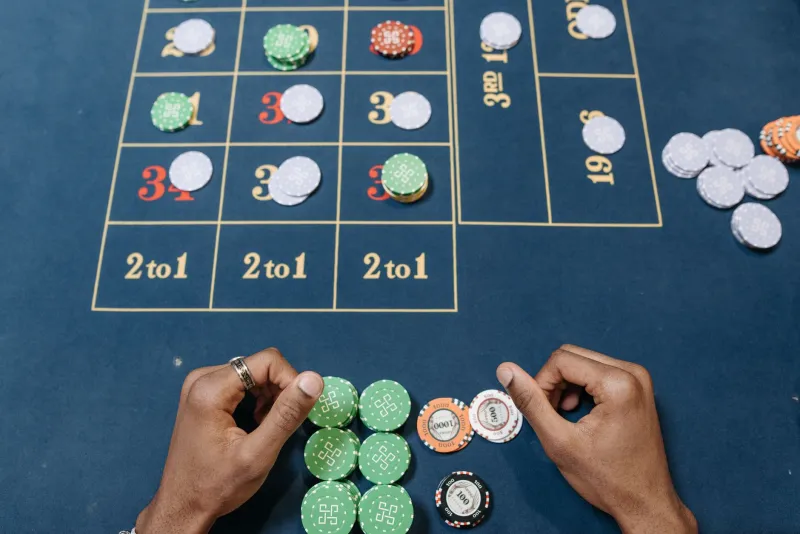
Cash on the Table: Why Bringing Too Much to Your Session Is Quietly Killing Your Game
There's a belief baked into gaming culture that more is always better. More chips, more options, more runway. Walk in heavy and you walk in confident, right? Not exactly. Some of the sharpest players in the game have figured out something that feels almost backwards at first: bringing too much money to a session can be just as damaging as bringing too little.
This isn't about being reckless with your bankroll. It's about understanding the psychology of liquidity — what happens to your brain when you know there's a deep well of cash sitting right there, fully accessible, every time you make a decision.
The Comfort Trap
Here's the thing about having a huge stack in front of you. It feels safe. But that feeling of safety is where the trouble starts.
When players know they have plenty of cushion, they unconsciously loosen their standards. A bet they'd normally skip starts to look acceptable. A borderline call becomes easier to justify because, hey, you can absorb the hit. This is what psychologists call cushion effect thinking — the false sense that abundance reduces risk, when in reality it just delays consequences long enough for bad habits to compound.
The irony is real: the more money you have available at the table, the less disciplined you tend to be with each individual decision. You're not playing sharper. You're playing looser, and you're probably not even aware of it.
What Professional Players Actually Do
Serious players don't just grab a chunk of their bankroll and head to the arena. They engineer their session allocation with the same precision they bring to their in-game strategy.
The general framework most pros operate within looks something like this:
- Session buy-in is a function of stakes, not total bankroll. If you're playing at a certain level, your session amount reflects the variance of that game — not your overall financial position.
- They set a hard ceiling. Knowing in advance exactly how much they're willing to lose in a single session creates a mental boundary that protects them from tilt-driven reloads.
- They don't keep reload cash visible or accessible. Out of sight genuinely means out of mind. If you have to physically leave the table to access more funds, you've built in a natural pause — a moment to reconsider whether that reload is actually justified.
This isn't just discipline theater. It's structural psychology. You're designing your environment so that the temptation to over-invest in a bad session requires friction rather than being one click away.
The Math Angle: Edge and Variance Determine Your Number
Let's get a little more concrete. Your ideal session bankroll isn't arbitrary — it can actually be calculated, at least roughly.
Start with your edge (your expected win rate per unit) and your variance (how wild the swings typically are in your game of choice). High-variance formats require deeper session stacks relative to the stakes because the natural swings are larger. Low-variance games can be played with tighter allocations.
A common rule of thumb among experienced players: bring 20 to 30 times the minimum unit for a standard session in a moderate-variance game. If you're in a high-variance environment, that number creeps up, but it still has a ceiling. Beyond a certain point, additional cash at the table stops providing strategic benefit and starts feeding the psychological trap we talked about earlier.
The key variable most players ignore? Risk tolerance. Not just your financial risk tolerance, but your emotional risk tolerance. How much can you realistically lose tonight without it affecting your next session mentally? That number — your true emotional ceiling — is often lower than your financial ceiling, and it's the one that actually matters.
The Reload Problem
One of the most common session-killing behaviors is the mid-session reload. You lose your initial buy-in, you reach back into your wallet or your account, and you're back in — except now you're playing from a deficit mindset. You're not starting fresh. You're chasing.
Studies on decision fatigue and loss aversion both point to the same conclusion: players who reload mid-session tend to make progressively worse decisions, not better ones. The losses have already triggered an emotional response. More money doesn't reset that response — it amplifies it.
The cleanest solution is the pre-commitment strategy. Before your session starts, decide your number. Lock it in. And treat a reload not as a lifeline but as a signal — a signal that tonight might not be your night, and that the smartest play might be logging off entirely.
Building Your Personal Session Formula
There's no one-size-fits-all answer here, but you can build a personal framework in about five minutes:
- Identify your stakes level. What's the standard unit size for your preferred game?
- Assess the variance. Is this a grind-it-out format or a high-swing environment?
- Set your session cap. Based on stakes and variance, land on a buy-in that gives you enough runway to play through normal variance without being so deep that you lose discipline.
- Define your stop-loss. Decide in advance what percentage of your session cap constitutes a bad enough night to walk away.
- Remove excess access. Don't keep more than your session cap readily available during play. Make reloads difficult, not easy.
This formula isn't complicated, but most players never bother to formalize it. They just bring what feels comfortable — which, as we've established, is usually too much.
Less Cash, Sharper Focus
Counter-intuitive as it sounds, constraining your session bankroll to the right number — not the biggest number you can afford — tends to sharpen your focus. Every decision carries appropriate weight. You're not cavalier with a bet because you know the cushion is limited. You're engaged, deliberate, and playing your actual A-game rather than a comfortable, sloppy version of it.
At LS88 Arena, we're big on the idea that bold play doesn't mean reckless play. The boldest thing you can do is engineer your sessions so that psychology works for you instead of against you. Knowing exactly how much is on the table — and making sure it's the right amount — is one of the highest-leverage moves you can make before a single game even starts.
Trim the stack. Sharpen the mind. Play better.